
How the Wisconsin Card Sorting Test works, what one attempt looks like card by card, where online versions live, and how a two-rule sorting game differs.
Blog
Articles about the Tyamka games, how to play them and what the results mean.
- The Wisconsin Card Sorting Test online, what it is and how it works
- Tyamka is on Instagram. What we post there, plus one puzzle to try here
Tyamka now has an Instagram account, @tyamka.app. Here is what the first nine posts cover, from the daily challenge to an odd one out puzzle, with one puzzle to solve and its answer at the end.
- Brain games without a subscription. What is free, what you pay for once, and where the ads are
How Tyamka works without a subscription, what the free levels include, what a one-time purchase adds, where the ads are, and what to check before paying.
- Does brain training work? What the research shows and what we promise
What studies from 2008 to 2017 found about brain games, why getting better at a game is not getting better at everyday tasks, and what Tyamka does not claim.
- The flanker task, and how it differs from the arrow Stroop
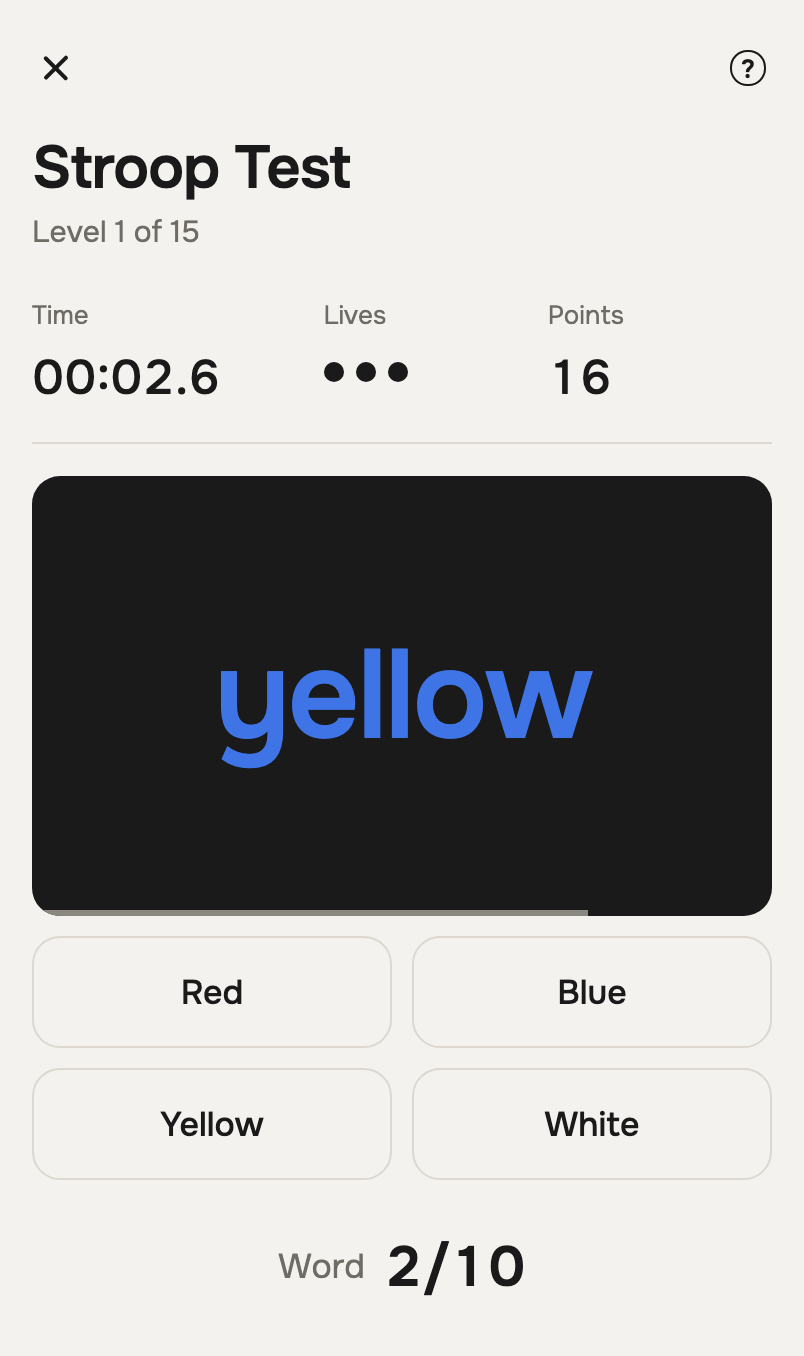
What the Eriksen flanker task is, how the arrow version works, how it differs from the Stroop test, and what our Arrow Rule game borrows from both.
- Schulte table variants, from the red-black Gorbov table to reverse order
The red-black Schulte–Gorbov table, counting down, letters instead of numbers and grids that reshuffle. How each variant works and which are in Tyamka.
- Schulte table average time, and why your own time matters more
What open sources say about average times on a 5×5 and 7×7 Schulte table, why the numbers disagree, and why your time changes from round to round.
- Printable Schulte tables, 5×5, 7×7 and red-black, plus how to make your own
Two 5×5 Schulte tables, a 7×7 table and a red-black Gorbov table to print from this page, how to make new ones, and how paper differs from online.
- Schulte table benefits, or what the task asks of you and what your time shows
People search for Schulte table benefits. What we can and cannot promise, what the task asks of you while you play, what your time shows and what it does not.
- Selective attention, with examples from daily life and from games
What selective attention is, the classic experiments behind it, and concrete examples, from a noisy café to the Stroop test, odd one out and card sorting games.
- The Stroop effect explained in plain words
Why it is hard to name the ink of the word RED printed in blue, what John Ridley Stroop found in 1935, and how you can feel the effect yourself in a minute.
- Stroop test examples you can try with a pen or in a browser
Stroop effect examples you can say out loud, from color words to numbers, pictures and direction words, and what changes when you read in a second language.
- What is a Schulte table? How it works and how to do your first one
A Schulte table is a square grid of shuffled numbers that you find in order, as fast as you can. Where it comes from, how to do one and how to practice.
- What does the Stroop test measure, and what can an online score tell you
The Stroop test measures how much a conflicting word slows you down. How researchers score it, why one result says little, and what our points mean.