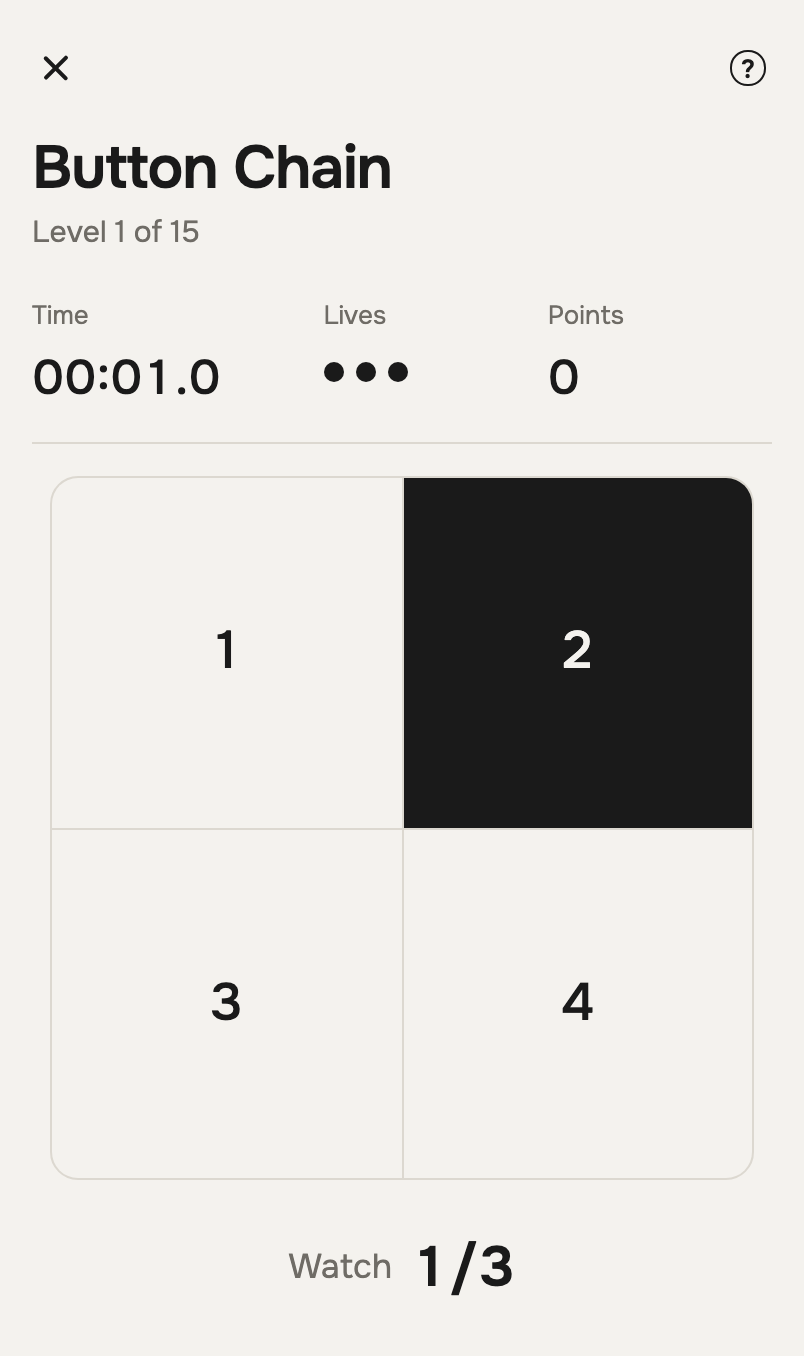
Mental math tricks for telling which of two results is bigger. Rounding, comparing term by term, the last digit, and where each trick stops working.
Blog
Articles about the Tyamka games, how to play them and what the results mean.
- Mental math tricks for adults, how to tell which result is bigger without the full sum
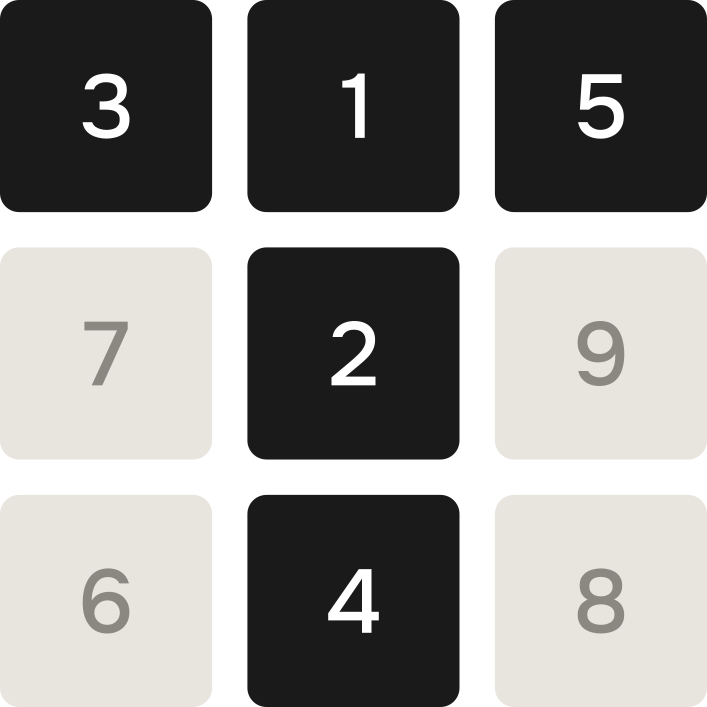
- Number memory test average, and what the research actually measured
How many digits people repeat back in studies from Miller to Cowan, what the chimpanzee number task measured, and why none of it is a norm for your own score.
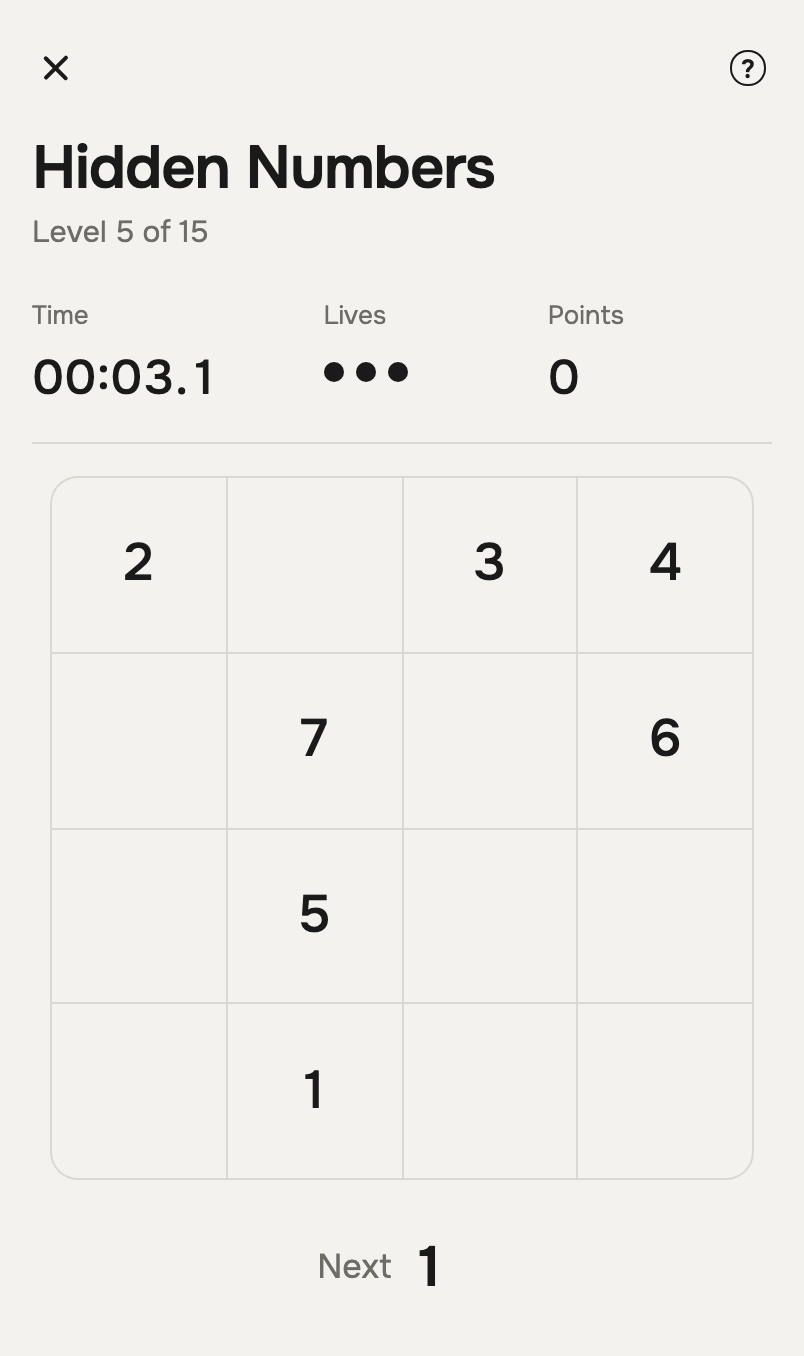
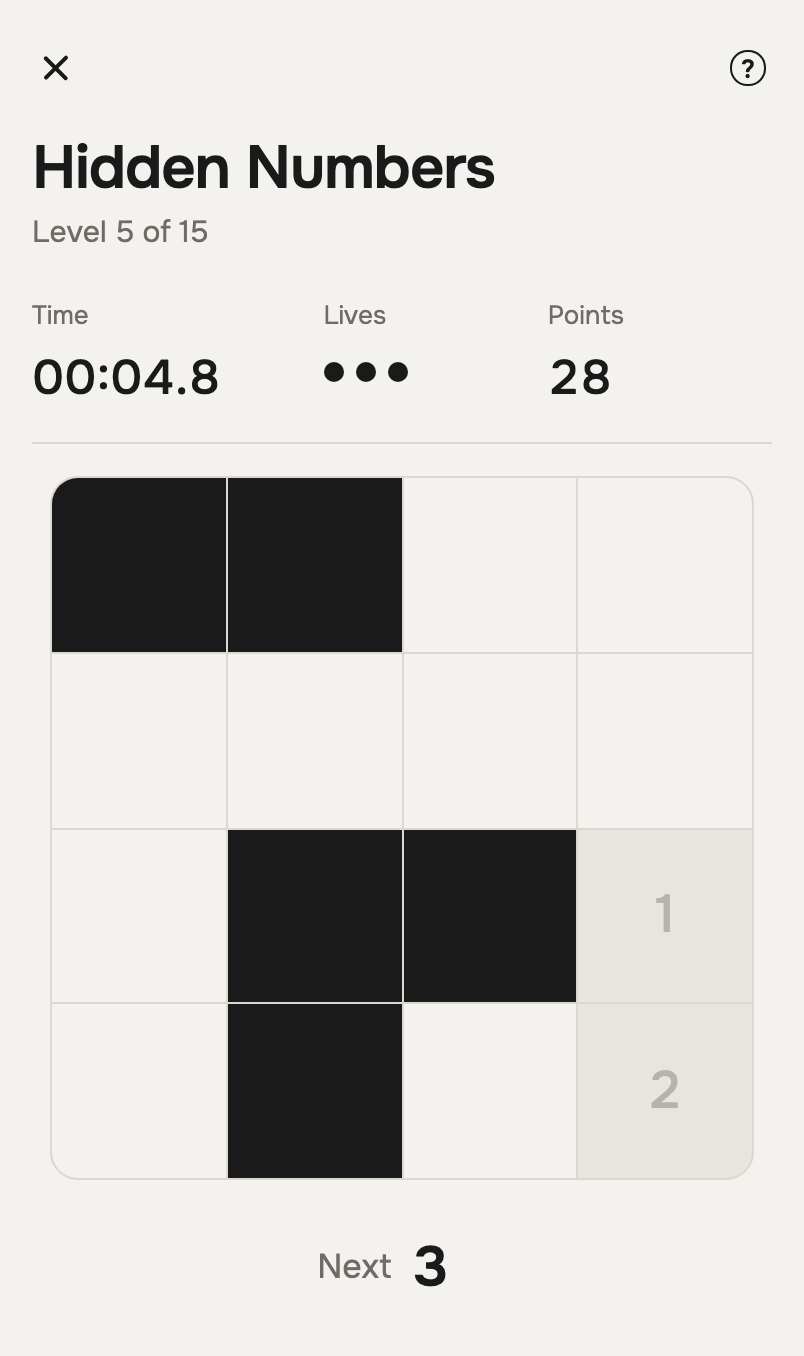
- Number memory test tips, for digit strings and for Hidden Numbers
How grouping and naming positions help you remember numbers on a grid, how the timer and lives work, and why your score jumps between attempts.
- F1 reaction test, how a five-light start works and what a fair test needs
An F1 reaction test copies the five red lights of a Formula 1 start. How the real start works, what driver times are public, and what makes a test fair.
- Reaction time for driving, and why a tap test is not a driver test
Reaction time for driving in research runs from about 0.7 to 1.5 seconds, and road design assumes 2.5. Why a tap on a screen is a different task.
- Reaction time test on mobile and on a computer, why the numbers differ
A reaction time test on mobile adds its own delay, and so does a laptop. What a lab found on ten device and browser pairs, and why not to compare them.
- Schulte table variants, from the red-black Gorbov table to reverse order
The red-black Schulte–Gorbov table, counting down, letters instead of numbers and grids that reshuffle. How each variant works and which are in Tyamka.
- Schulte table average time, and why your own time matters more
What open sources say about average times on a 5×5 and 7×7 Schulte table, why the numbers disagree, and why your time changes from round to round.
- Printable Schulte tables, 5×5, 7×7 and red-black, plus how to make your own
Two 5×5 Schulte tables, a 7×7 table and a red-black Gorbov table to print from this page, how to make new ones, and how paper differs from online.
- Schulte table benefits, or what the task asks of you and what your time shows
People search for Schulte table benefits. What we can and cannot promise, what the task asks of you while you play, what your time shows and what it does not.
- Selective attention, with examples from daily life and from games
What selective attention is, the classic experiments behind it, and concrete examples, from a noisy café to the Stroop test, odd one out and card sorting games.
- Sequence memory test average, from Corsi blocks to Button Chain
How long a sequence adults usually repeat in the Corsi block test and in Simon-style games, where the numbers come from, and how Button Chain differs.